
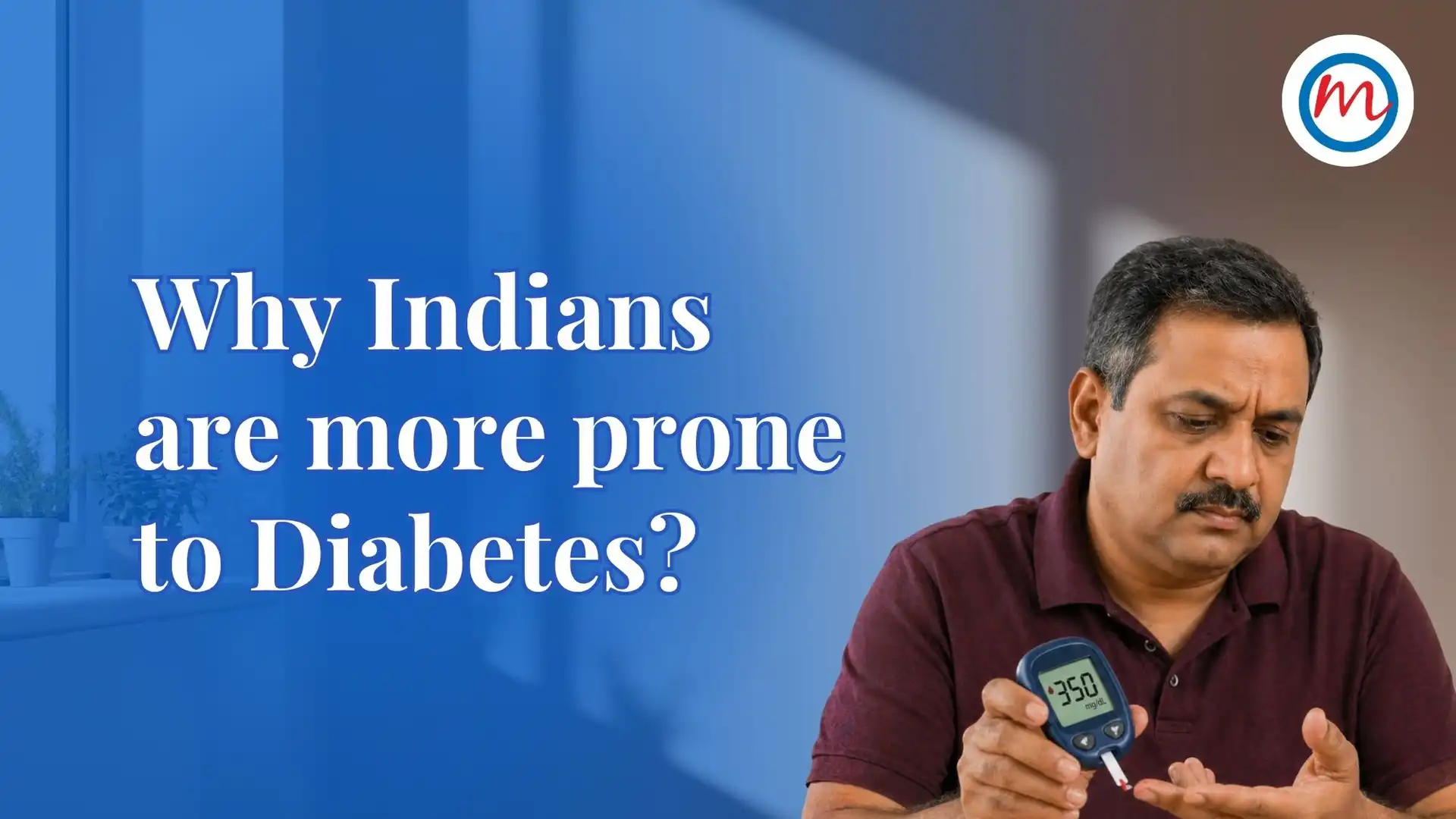
Why Indians Are More Prone to Diabetes
Why Indians are more prone to diabetes is a question that has gained serious attention in recent years.
India is often called the diabetes capital of the world. This is not just due to lifestyle — genetics plays a major role. The higher diabetes risk in the Indian population is influenced by both inherited traits and modern habits.
Understanding why diabetes is more common in Indians can help you take early and practical steps to prevent it.
The Indian Phenotype
One of the biggest reasons why Indians are more prone to diabetes is something known as the Indian phenotype.
Research shows that Indians tend to have higher body fat even at a normal weight, especially around the abdomen. This type of fat is more dangerous than it looks.
Abdominal fat increases insulin resistance, which is a major cause of rising blood sugar levels.
Lower Muscle Mass
Another important factor behind why diabetes is common in Indians is lower muscle mass compared to other populations.
Muscles play a key role in absorbing glucose from the bloodstream. When muscle mass is low, glucose utilisation drops, leading to higher blood sugar levels.
This is one of the hidden reasons why Indians develop diabetes even without obvious weight gain.
Genetic Predisposition
The Indian genetic risk for diabetes is significantly higher than in many other populations.
Many Indians are naturally more insulin resistant, meaning the body does not respond effectively to insulin. As a result, sugar builds up in the blood.
This genetic tendency has been passed down across generations, which explains why Indians are more prone to diabetes even at younger ages.
For more scientific insights, refer to
NCBI research articles.
Thrifty Gene Hypothesis
The thrifty gene hypothesis helps explain why diabetes risk in the Indian population is so high today.
It suggests that our ancestors developed genes that stored fat efficiently during times of food scarcity. While this was useful in the past, it has become harmful in today’s environment.
With easy access to high-calorie foods, these same genes now contribute to fat accumulation and metabolic disorders.
Early Onset of Diabetes
Another major concern is that Indians tend to develop diabetes earlier than many other populations.
This early onset increases the risk of long-term complications such as heart disease, kidney problems, and nerve damage.
This clearly shows why Indians are more prone to diabetes and why early prevention is critical.
Lifestyle Factors That Worsen the Risk
While genetics creates the base risk, lifestyle is what accelerates it.
- Sedentary lifestyle
- High carbohydrate intake
- Chronic stress
- Poor sleep patterns
These modern habits are a big reason why diabetes is more common in Indians today.
Learn more from
World Health Organization.
Central Obesity and Hidden Fat
Many Indians appear slim but carry high levels of internal fat, also known as visceral fat.
This fat surrounds vital organs and significantly increases insulin resistance.
This is another overlooked reason why Indians are more prone to diabetes despite having a normal body weight.
What Can Be Done to Reduce Risk
Even with genetic risk, diabetes is not unavoidable.
- Maintain a healthy weight
- Exercise regularly
- Eat balanced meals
- Monitor blood sugar levels
- Get regular health check-ups
Making these changes can significantly reduce the overall diabetes risk in the Indian population.
Importance of Early Screening
Since the risk is higher, screening should start earlier.
Waiting for symptoms is a mistake. Early detection helps in better control and prevents complications.
This is especially important if you have a family history, as it increases your chances of developing the condition.
Final Thought
The reason why Indians are more prone to diabetes comes down to a mix of genetics, body composition, and lifestyle.
The risk is real, but it is manageable. With the right habits and early action, you can stay ahead of the problem.
Take the Next Step
If you are concerned about your risk or have a family history, early screening is the smartest move.
Visit
Dr Mohan’s Diabetes Specialities Centre
for advanced screening and personalised preventive care.