
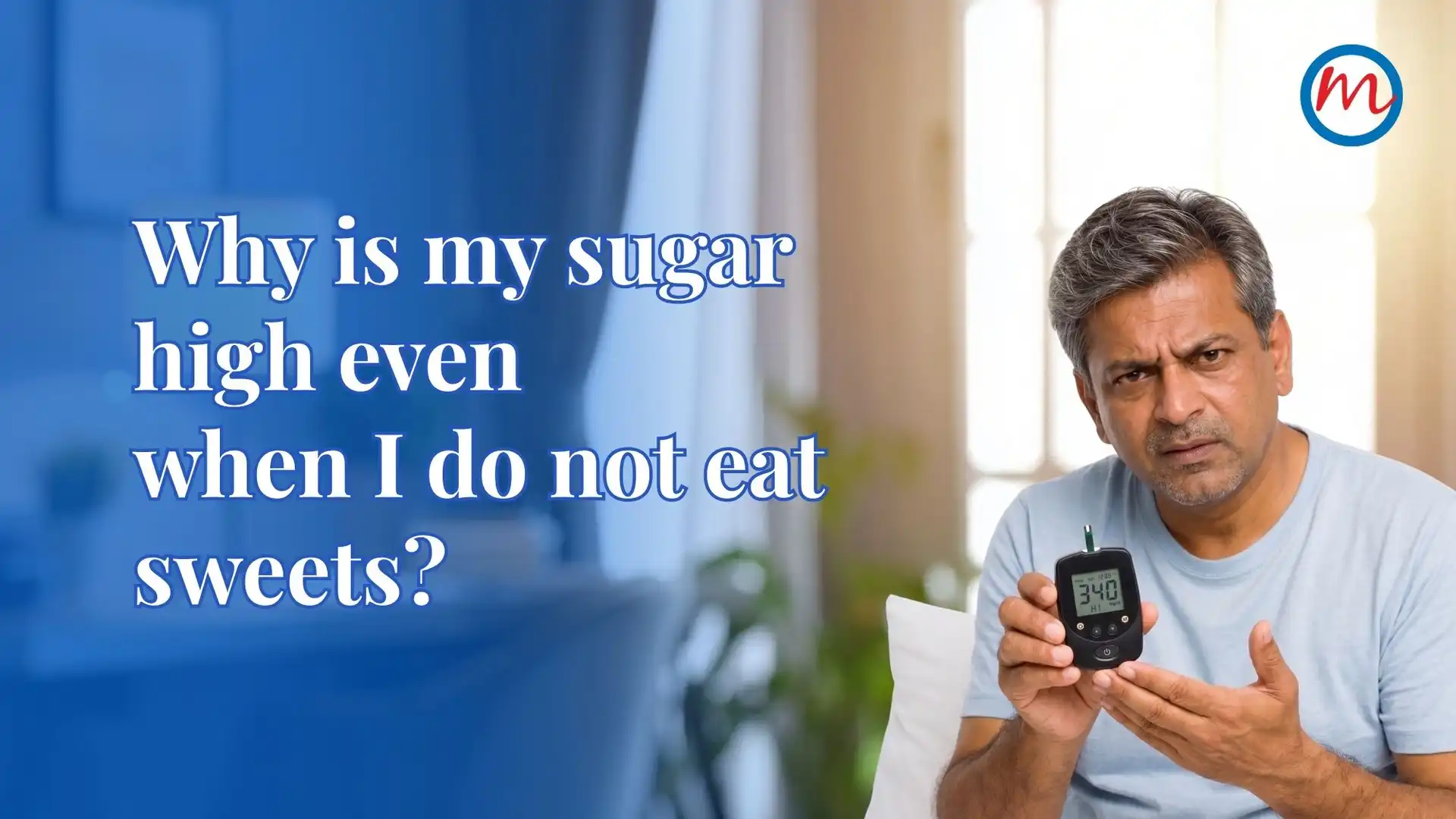
Why is my sugar high even when I do not eat sweets
Many people living with diabetes come with a common concern. They say, “Doctor, I have completely stopped sweets. Still my sugar is high. What am I doing wrong?”
This is a very important question. The simple truth is that sugar levels in the body are not controlled only by sweets. In fact, many other factors play a much bigger role.
Let us understand this clearly.
Sugar does not come only from sweets
When we say blood sugar, we are referring to glucose in the blood. Glucose is produced from all carbohydrates, not just sweets.
Foods like rice, chapati, idli, dosa, bread, potatoes and even fruits get converted into glucose once they are digested.
So even if you avoid sweets completely but consume large portions of rice or carbohydrates, your sugar levels can still rise. This is one of the biggest misconceptions.
Portion size matters more than type alone
Many patients say they eat only home food. That is good. But quantity matters.
A large plate of rice can increase blood sugar significantly, even though it is not sweet. Similarly, frequent snacking, even healthy snacks, can keep sugar levels elevated throughout the day.
Hidden sugars in daily diet
There are also hidden sugars in foods we do not suspect.
- Tea and coffee with sugar
- Packaged juices
- Biscuits and bakery items
- Processed foods
Even small amounts taken multiple times a day can affect overall glucose control.
Role of insulin resistance
In type 2 diabetes, the body becomes resistant to insulin. This means even if you are not eating sweets, the body is unable to use glucose effectively.
As a result, sugar accumulates in the blood. This is why diet alone is sometimes not enough. Medication and lifestyle changes become necessary.
Stress can increase sugar
This is something many people underestimate.
When you are stressed, your body releases hormones like cortisol. These hormones increase blood sugar levels. So even if your diet is perfect, emotional stress, poor sleep, or anxiety can push your sugars up.
Lack of physical activity
If you are not physically active, the glucose in your body is not used efficiently.
Exercise helps muscles absorb glucose from the blood. Without activity, sugar levels tend to remain high. Even simple walking after meals can make a difference.
Dawn phenomenon
Some patients notice high fasting sugar levels even when they eat very carefully at night.
This can be due to something called the dawn phenomenon. Early morning hormones increase blood sugar naturally. This is not related to sweets at all.
Medication timing and adherence
Sometimes sugar remains high because medicines are not taken at the right time or doses need adjustment.
Diabetes is a progressive condition. What worked one year ago may not be enough now. Regular follow up is essential.
What should you do
Do not focus only on avoiding sweets. Instead, take a holistic approach.
- Control portion size
- Choose balanced meals with protein and fibre
- Stay physically active
- Manage stress
- Sleep well
- Take medications as advised
Most importantly, monitor your sugar regularly and consult your doctor.
Diabetes management is not about eliminating one food. It is about understanding how your body responds to everything you eat and do.
If your sugars are high despite your efforts, do not get discouraged. It simply means your plan needs to be adjusted.
If you are struggling to control your sugar levels despite avoiding sweets, it is time to get expert guidance.
Visit Dr Mohan’s Diabetes Specialities Centre for a comprehensive evaluation and personalised diabetes care plan designed specifically for you.