
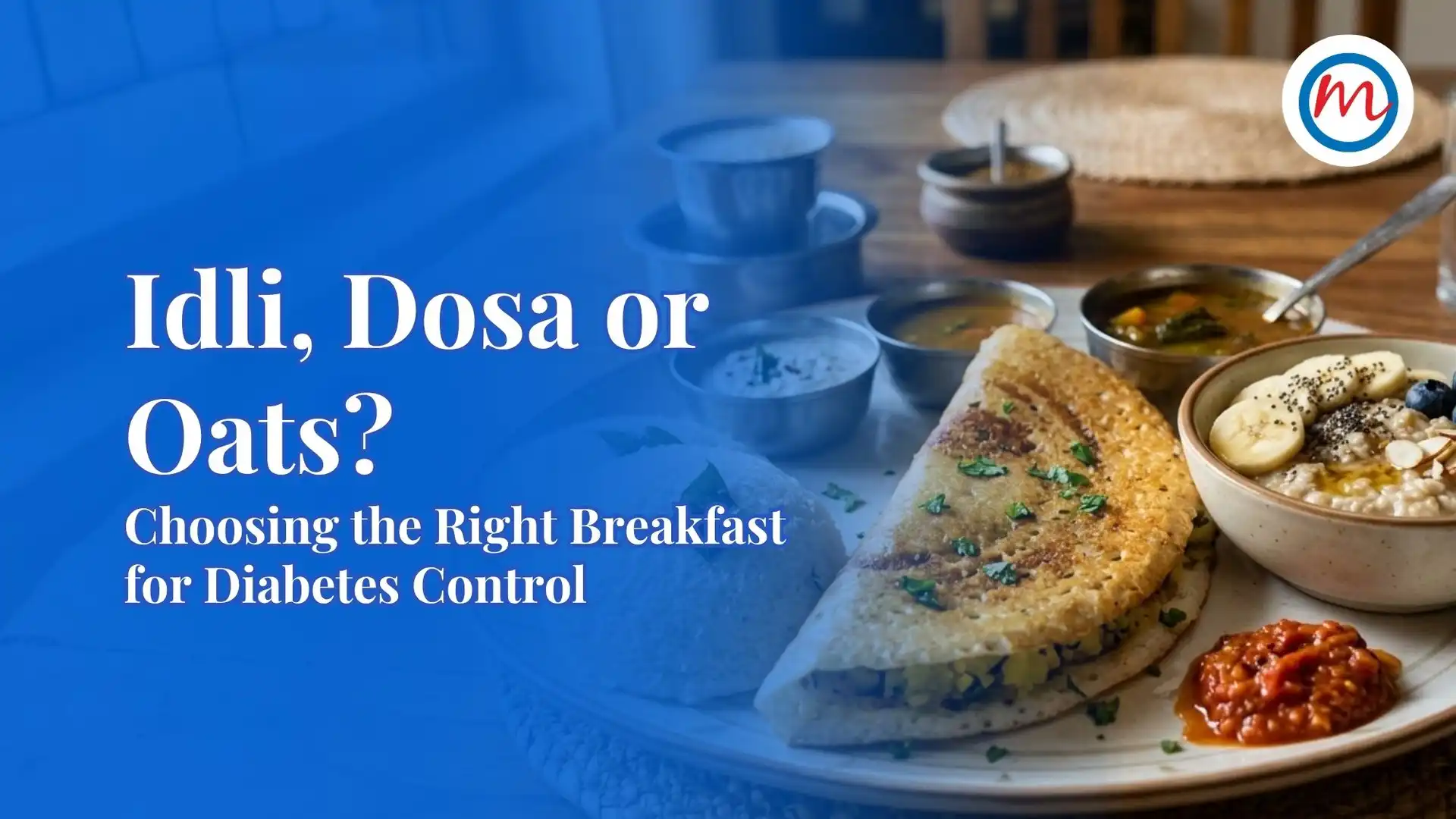
Idli, Dosa or Oats? Choosing the Right Breakfast for Diabetes Control
Breakfast is often considered the most critical meal of the day, especially for those managing diabetes. A well-planned morning meal sets the tone for your metabolism, providing steady energy and preventing the dreaded “rollercoaster” of blood sugar fluctuations.
Finding the right breakfast for diabetes is a common challenge in many Indian households, and the debate usually boils down to the classics: Idli, Dosa or Oats? While all three can have a place on your table, understanding their impact on your glucose levels is key to making the right choice. If you are unsure where to begin, our complete guide to diabetes diet and nutrition is a great starting point.
Breaking Down the Options for a Diabetes-Friendly Breakfast
1. Idli: The Steamed Classic
Idli is widely praised because it is steamed and fermented, making it easy on the gut.
- The Reality: Traditional idli is primarily made of white rice and urad dal. Since rice is a refined carbohydrate, eating 4 to 5 idlis at once can cause a significant sugar spike.
- The Fix: Limit the number of idlis and ensure your sambar is loaded with extra vegetables to provide necessary fiber.
2. Dosa: The Versatile Favourite
Dosa offers a satisfying crunch, but its health value depends heavily on how it is made.
- The Reality: A plain dosa uses similar batter to idli but is cooked with oil. A “Masala Dosa” adds a heavy potato filling, which is an extra dose of fast-acting carbohydrates.
- The Fix: Use minimal oil and swap the potato filling for a paneer or vegetable sauté. You can also try a Ragi or Moong Dal dosa for a much lower Glycemic Index option.
3. Oats: The Fiber Champion for Breakfast for Diabetes
Oats have gained popularity as a “diabetes superfood” due to a specific type of fiber called beta-glucan. According to the American Diabetes Association, choosing high-fiber carbohydrates and controlling portion sizes are two of the most effective strategies for blood sugar management.
- The Reality: Plain, rolled, or steel-cut oats are excellent for slowing down sugar absorption. However, instant flavoured oats are often processed and contain hidden sugars and preservatives.
- The Fix: Stick to plain oats and add your own flavour with cinnamon, nuts or seeds.
The Secret: It is Not About One Single Food
Instead of looking for a “perfect” food, focus on balancing your plate. No matter which base you choose, it needs a “buddy” to slow down digestion. Understanding the glycaemic response of different foods can help you make smarter choices every day.
How to Build a Balanced Breakfast Plate:
- Add Protein: Pair your idli or dosa with a bowl of sprouts or a boiled egg.
- Increase Fiber: Make your sambar thick with drumsticks, pumpkin, and beans.
- Smart Fats: Add a few walnuts or almonds to your oats to keep you full for longer.
- The Veggie Boost: Mix grated carrots or finely chopped spinach directly into your idli or dosa batter.
Quick Comparison: Breakfast Swaps for Diabetes
| Instead of… | Choose… | Why? |
| 4 Rice Idlis | 2 Idlis + 1 bowl of vegetable Sambar | Increases fiber and reduces carb load. |
| Masala Dosa (Potato) | Paneer or Vegetable Dosa | Adds protein and reduces starch. |
| Instant Sugary Oats | Plain Oats with Walnuts and Seeds | Slower sugar absorption and heart-healthy fats. |
| White Rice Dosa | Ragi or Moong Dal (Pesarattu) Dosa | Provides a lower Glycemic Index (GI) alternative. |
Important Breakfast Habits for Diabetes Control
- Never Skip: Skipping breakfast can lead to “starvation ketosis” or cause you to overeat at lunch, leading to a massive afternoon sugar spike.
- Watch the Chutney: Coconut chutney is delicious but high in calories. Try to limit the portion or opt for a tomato-onion or mint chutney instead.
- Portion Control: Even healthy food can raise sugar if eaten in excess. Listen to your body’s hunger cues.
The International Diabetes Federation also emphasises that meal timing, portion control, and food quality together determine how well blood sugar is managed — no single food works in isolation.
So, which is best? There is no one-size-fits-all answer. Oats generally have the best fiber profile, but Idli and Dosa are culturally sustainable and healthy if you manage the portions and pair them with protein.
The best breakfast for diabetes is one that you enjoy, that keeps you full until lunch and most importantly, that keeps your blood sugar within your target range. For a full day-by-day plan, explore our Indian diabetes diet plan.
FAQs
1. Is idli healthy for diabetes?
Yes, but only in controlled portions. Because it is rice-based, it should always be balanced with fiber-rich sambar or protein-rich sides.
2. Is dosa better than idli?
Both are similar in nutrition. However, dosa can be higher in calories due to the oil used for frying. Opting for a non-stick pan to reduce oil is a smarter choice.
3. Are oats good for diabetes?
Yes, plain oats are very beneficial due to their high fiber content. Avoid “instant” varieties that contain added sugar or flavours.
4. What is the healthiest breakfast for diabetes?
A balanced meal that includes a controlled portion of complex carbohydrates, a good amount of fiber (vegetables), and a source of protein.
Confused About Your Diabetes Diet?
Creating the perfect meal plan can be tricky. Get expert help from the nutritionists at Dr. Mohan’s Diabetes Specialities Centre. We provide personalized meal planning designed to help you enjoy your favourite foods while maintaining excellent sugar control.
Consult our specialists today for a healthier tomorrow!