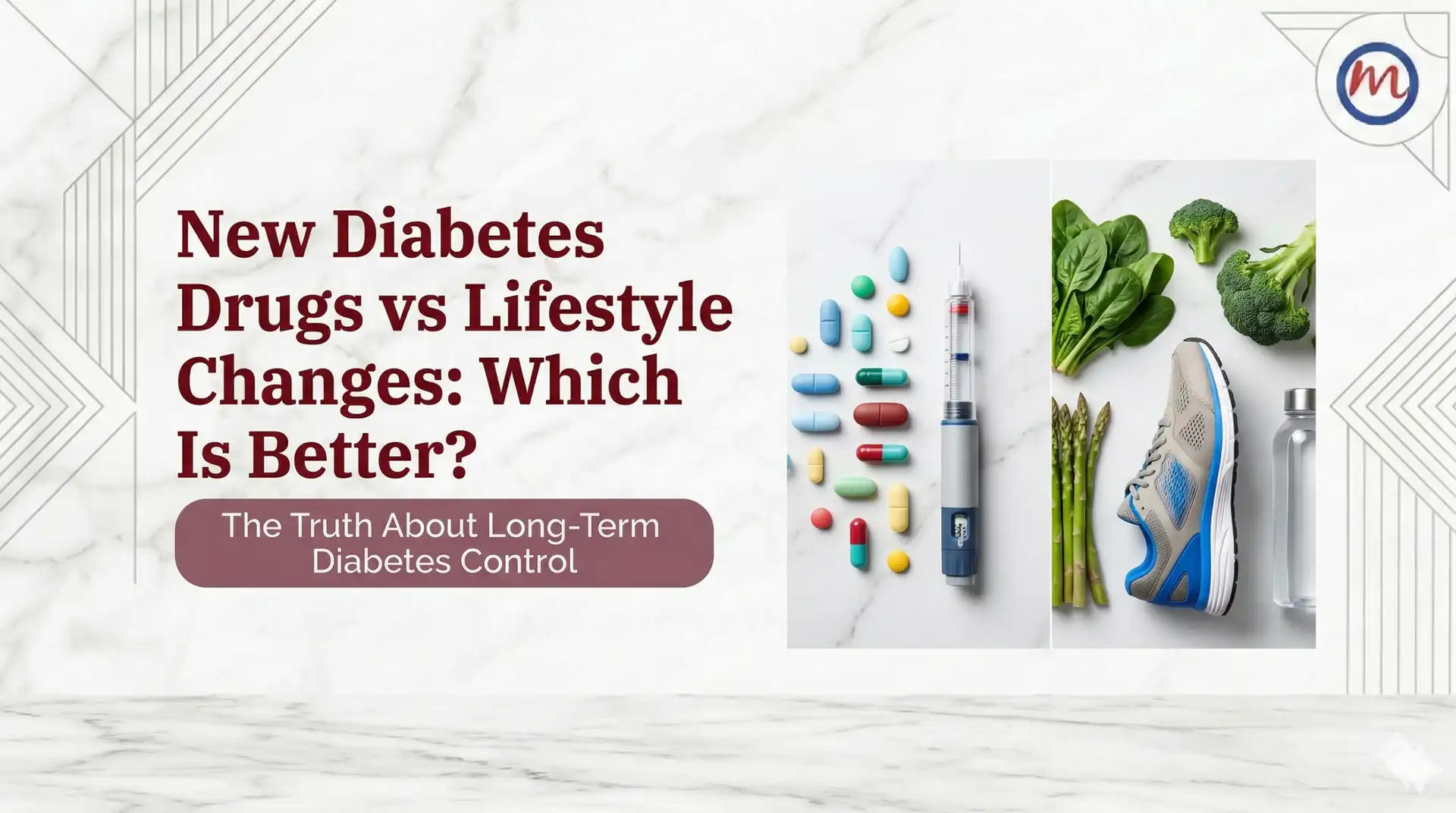
With rapid advancements in diabetes treatment, many new medications now promise better sugar control, weight loss, and reduced complications. This has led to one of the most common questions patients ask today — new diabetes drugs vs lifestyle changes: which is actually better for managing diabetes in the long run?
It is an important question, especially in India where diabetes is rising at an alarming rate. The truth about new diabetes drugs vs lifestyle changes is more balanced than most people expect. While new drugs are highly effective, they cannot replace lifestyle changes — and understanding how both work together is the real key to long-term diabetes control.
For expert diabetes care tailored to your needs, visit drmohans.com
Understanding New Diabetes Drugs
Modern diabetes medications have significantly improved over the years. When examining new diabetes drugs vs lifestyle changes, it is important to first understand what these medicines can actually do. They are designed to not only lower blood sugar but also address other aspects of metabolic health. They can:
- Improve insulin function and sensitivity
- Reduce blood sugar levels effectively and consistently
- Support weight loss in certain patients
- Lower the risk of diabetes-related complications
According to the American Diabetes Association (ADA), several newer drug classes have demonstrated significant cardiovascular and kidney-protective benefits, making them valuable tools in modern diabetes care.
New Diabetes Drugs vs Lifestyle Changes: What Do Lifestyle Changes Really Mean?
When discussing new diabetes drugs vs lifestyle changes, lifestyle changes are often spoken about but rarely understood in full depth. They go far beyond simple advice like eating less sugar or walking occasionally. A proper lifestyle approach includes:
- A balanced, nutritious, and low-glycaemic diet
- Regular and structured physical activity
- Maintaining a healthy body weight
- Adequate and consistent sleep
- Effective stress management
These factors directly influence how the body handles blood sugar and insulin — targeting the root cause of type 2 diabetes in a way that no medication alone can fully replicate.
How Lifestyle Changes Impact Diabetes Control
In the debate of new diabetes drugs vs lifestyle changes, lifestyle interventions hold a uniquely powerful position because they address the underlying causes of the condition. Research published by the World Health Organization (WHO) confirms that lifestyle modification remains one of the most effective strategies for preventing and managing type 2 diabetes. Key benefits include:
- Improved insulin sensitivity across all tissues
- Better and more stable blood sugar control
- Reduced need for medication over time
- Lower risk of long-term complications
- Improved cardiovascular and overall health
In some cases, early and consistent lifestyle intervention can significantly delay or even prevent diabetes progression entirely.
New Diabetes Drugs vs Lifestyle Changes: Can Medicines Replace Healthy Habits?
One of the biggest misconceptions in the new diabetes drugs vs lifestyle changes conversation is that starting medication means lifestyle no longer matters. This is not true.
Medicines help control blood sugar, but they do not fully correct the underlying causes — poor diet, physical inactivity, and excess body weight. Ignoring lifestyle habits can reduce the effectiveness of even the most advanced diabetes drugs. Medication and lifestyle are not an either/or choice — they are partners in treatment.
What New Diabetes Drugs Can Do Effectively
To be fair in the new diabetes drugs vs lifestyle changes debate, modern diabetes drugs are genuinely powerful tools. They can:
- Quickly bring down dangerously high blood sugar levels
- Provide consistent, measurable sugar control
- Reduce symptoms and protect against organ complications
- Deliver benefits that lifestyle changes alone may not achieve quickly enough in advanced cases
For many patients, medicines are necessary, life-improving, and potentially life-saving.
Limitations of Relying Only on Medication
In the new diabetes drugs vs lifestyle changes discussion, it is equally important to acknowledge what medicines cannot do when used in isolation:
- They do not address the root lifestyle habits driving the condition
- Dosage requirements may increase over time without lifestyle support
- They cannot fully prevent complications if dietary and activity habits remain poor
- Stopping medication without lifestyle change can cause rapid worsening of the condition
This is why a combined approach is always the clinical recommendation.
New Diabetes Drugs vs Lifestyle Changes: The Ideal Combined Approach
The answer to new diabetes drugs vs lifestyle changes is not one or the other — it is both, working together. The most effective diabetes management plan combines:
- Appropriate medication prescribed and monitored by a specialist
- A healthy, balanced, and personalised diet plan
- A consistent and structured exercise routine
- Ongoing weight management
- Routine health monitoring and medical follow-ups
This combined approach ensures better control, fewer complications, and long-term metabolic stability.
Real-Life Outcomes: When New Diabetes Drugs and Lifestyle Changes Work Together
Patients who follow both medical treatment and lifestyle changes in the new diabetes drugs vs lifestyle changes framework consistently achieve the best results. They often experience:
- More stable and predictable blood sugar levels
- Reduced need for higher medication doses over time
- Better energy levels and overall wellbeing
- Significantly lower risk of serious long-term complications
This combination leads to measurably improved quality of life compared to either approach alone.
Common Mistakes That Undermine Both Drugs and Lifestyle Efforts
Many patients unknowingly reduce the effectiveness of their treatment in the new diabetes drugs vs lifestyle changes journey by making avoidable mistakes:
- Relying entirely on medication and ignoring dietary advice
- Stopping lifestyle efforts once blood sugar improves temporarily
- Skipping physical activity due to busy schedules
- Missing routine medical follow-ups and monitoring
- Expecting medicines to compensate for poor habits
Consistency in both areas is what sustains long-term results.
Long-Term Benefits That Lifestyle Changes Offer Beyond Drug Therapy
A key insight in the new diabetes drugs vs lifestyle changes debate is that lifestyle changes deliver benefits that medicines simply cannot replicate in full. These include:
- Improved heart health and reduced cardiovascular risk
- Enhanced physical fitness and muscle strength
- Better mental wellbeing and reduced stress
- Increased longevity and overall quality of life
These wide-ranging benefits make lifestyle an irreplaceable pillar of diabetes care — not optional, but essential.
The Role of Personalised Care in New Diabetes Drugs vs Lifestyle Changes
Each person with diabetes is different, and the right balance of new diabetes drugs vs lifestyle changes will vary based on individual factors including age, duration of diabetes, body composition, lifestyle habits, and the presence of other health conditions.
Doctors customise treatment plans to reflect these differences and ensure the best possible outcomes for each patient.
Learn more about structured, personalised diabetes and metabolic care at Dr Mohan’s Diabetes Specialities Centre.
Final Thoughts: New Diabetes Drugs vs Lifestyle Changes
The verdict on new diabetes drugs vs lifestyle changes is clear — it is not a competition. Both are essential, and both are most powerful when used together.
New diabetes drugs have made treatment more effective and convenient. They are valuable, evidence-backed tools that help manage blood sugar and reduce complications. But they are not a replacement for lifestyle changes — they are a complement to them.
The best results in the new diabetes drugs vs lifestyle changes debate are always achieved through the right balance: medicines that support the process, and lifestyle changes that create lasting transformation.
Take control of your diabetes with expert, personalised guidance at Dr Mohan’s Diabetes Specialities Centre. Get a care plan designed for your specific health needs today.